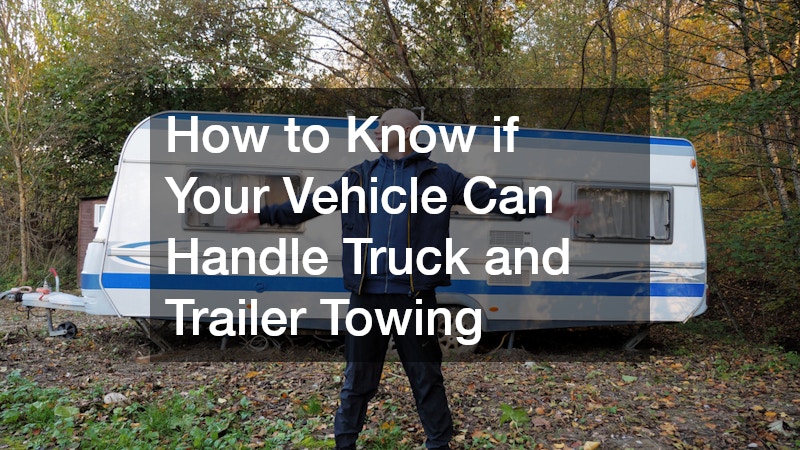
Towing a trailer can be incredibly useful, whether you are hauling heavy equipment, moving large loads, or heading out for a weekend adventure. However, not every vehicle is built to manage the demands of truck and trailer towing safely. Understanding your vehicle’s capabilities is essential before hooking up a trailer, as exceeding limits can lead to mechanical damage, unsafe driving conditions, and costly repairs. By evaluating key factors such as towing capacity, engine performance, and braking systems, you can determine whether your vehicle is properly equipped for the task.
Understanding Towing Capacity and Vehicle Ratings
The first and most critical step in determining towing readiness is knowing your vehicle’s towing capacity. This figure, typically provided by the manufacturer, represents the maximum weight your vehicle can safely tow.
It accounts for the strength of the engine, transmission, suspension, and frame. You can usually find this information in your owner’s manual or on the manufacturer’s website.
In addition to towing capacity, you should also understand Gross Vehicle Weight Rating (GVWR) and Gross Combined Weight Rating (GCWR). GVWR refers to the maximum weight your vehicle can carry, including passengers and cargo, while GCWR includes both your vehicle and the loaded trailer. Staying within these limits ensures that your vehicle maintains proper handling and structural integrity during trailer and truck towing.
It is important to remember that towing capacity is not just about the trailer itself. The total weight includes everything loaded onto the trailer, such as tools, supplies, or recreational gear. Even small miscalculations can push your setup beyond safe limits. Taking the time to weigh your load or estimate it accurately can prevent unnecessary strain on your vehicle.
Evaluating Engine Power and Transmission Strength
Beyond weight limits, your vehicle’s powertrain plays a major role in its ability to tow effectively. Engine size, torque output, and transmission type all influence towing performance. Vehicles designed for truck and trailer towing typically feature engines with higher torque, allowing them to pull heavy loads without excessive strain.
If your vehicle struggles to accelerate or maintain speed under load, it may not be suitable for towing. Transmission systems are also critical, as towing places additional heat and stress on internal components. Many vehicles equipped for towing include transmission coolers to help regulate temperature and prevent overheating during long trips or steep climbs.
Another factor to consider is drivetrain configuration. Rear-wheel drive and four-wheel drive vehicles generally offer better towing stability compared to front-wheel drive models. This is due to improved weight distribution and traction when pulling a trailer. While some smaller vehicles can handle light towing tasks, they may not be ideal for frequent or heavy-duty use.
Checking Braking Systems, Suspension, and Safety Features
Safe towing is not just about moving a load forward. It is equally about maintaining control and stopping power. Your vehicle’s braking system must be capable of handling the additional weight of a trailer. In many cases, trailers above a certain weight require their own braking system, often referred to as trailer brakes, to reduce the strain on your vehicle.
Suspension also plays a key role in maintaining stability. A vehicle with a weak or worn suspension may sag under the weight of a trailer, affecting steering and visibility. Upgraded suspension components or weight-distribution hitches can help balance the load and improve handling during trailer and truck towing.
Modern safety features can further enhance towing confidence. Systems such as trailer sway control, backup cameras, and blind-spot monitoring are designed to assist drivers when managing larger loads. While these features do not increase towing capacity, they contribute to a safer overall experience, especially for those new to towing.
Determining whether your vehicle can handle truck and trailer towing requires a careful assessment of several factors, from towing capacity and engine performance to braking systems and suspension strength. Each component plays a role in ensuring safe and efficient towing, and overlooking any one aspect can compromise both performance and safety. Before towing, take the time to review your vehicle’s specifications, evaluate your load, and make any necessary upgrades or adjustments. By doing so, you can approach towing with confidence, knowing your vehicle is equipped to handle the demands of the road while keeping you and others safe.